What have you been up to so far this season? I’ve been enjoying the changing weather and getting outside as much as possible. I like to take a mid-morning walk to break up my workday, and even here in California there are changes in color and in the air at this time of year. Another highlight for me so far this season was a celebratory dinner at San Francisco restaurant Jeanne d’Arc with fellow members of my local translator’s association: delicious food and lovely company. It’s always fun to walk into a room and hear about ten different languages being spoken all at once!
For today’s post, I’m sharing some “dichos”. “Dichos” are sayings or proverbs of wisdom. There are many dichos in Spanish, some well-known and others that only pop up once in a while. Here are four of my favorites, in no particular order. All translations into English are mine, and hopefully I’ve captured the sentiment of each.
Camarón que se duerme, se lo lleva la corriente.– The shrimp that sleeps gets swept away by the current.
No tengas como vano el consejo del anciano.– Do not take in vain the advice of an elderly person.
Si quieres el perro, acepta las pulgas. – If you want the dog, accept the fleas.
Poco a poco se anda lejos. – Little by little, one walks far.
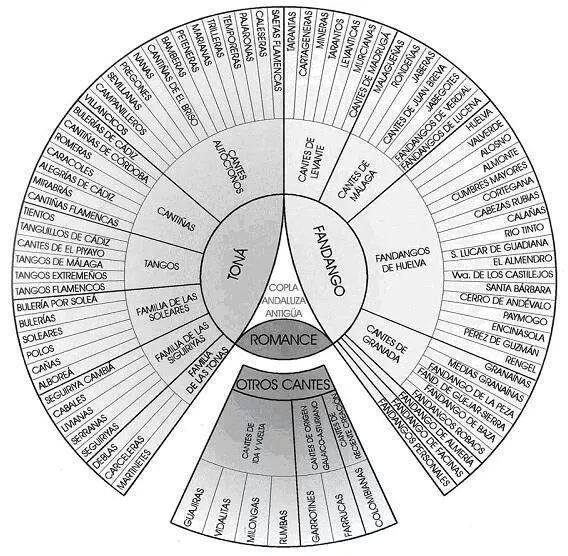
Last year I heard “La Petenera” for the first time. La Petenera is a song with its origins in Spain; it is sung in the flamenco style. There are actually many Peteneras, and they make up a specific category of flamenco song with a “palo” of a strong twelve-beat meter. The ever-popular “Sevillanas” are in the same family as “Peteneras”:
The many, many “palos” of flamenco!
But back to “La Petenera”. This is a heavy song. Countless theories, verses, versions and superstitions surround it. I’ll try to keep this description fairly simple, and if you want to really go down the “rabbit hole,” see some of the links I share at the end of this post!
The song’s dark, melancholic lyrics tell the story of a woman who brings heartache and bad luck to the men she seduces. One version tells of her funeral, in which the streets are so crowded with her former lovers that one cannot move. To this day, some performers refuse to play or sing Peteneras because they believe that doing so will bring bad luck – or even death.
There are three theories as to how this song came to be.
One theory is that the name of the song refers to a “cantadora” (a woman singer) called “La Petenera” who was born in Paterna de Rivera, a town in the province of Cádiz in Andalucía, Southern Spain. She was seductive yet cold-hearted, and known to be the “damnation of men”. The name “Petenera” would have been derived over time from “Paternera”, a woman from the town of Paterna:
Quien te puso Petenera no supo ponerte nombre que te debían de haber puesto la perdición de los hombres.
Whoever called you Petenera did not know how to name you and should have called you the damnation of men.
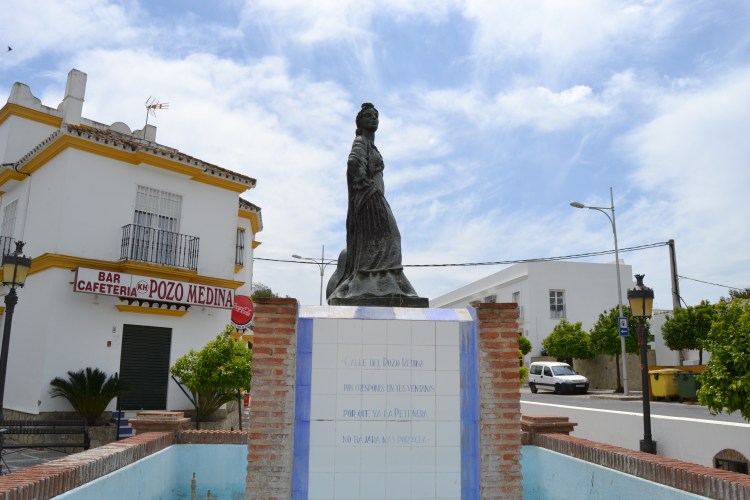
Monument to La Petenera in Paterna de Rivera, Cádiz province
A second theory is that this song was sung by the Sephardic Jews who came to Spain from the Balkans generations ago. It’s said that some Sephardim of the Middle East still sing this song. In one version, the lyrics refer to a beautiful Jewish woman who is going to the synagogue in search of “Rebeco,” assumed to be an antiquated version of the name “Rebecca”:
¿Adónde vas, bella judía tan compuesta y a deshora? Voy en busca de Rebeco que está en la sinagoga.
Where are you going, beautiful Jewish woman? so dressed up and at this late hour? I’m going in search of Rebeco who is in the synagogue.
La Petenera with her men on strings.
The third theory is that the song originated in the Americas and then made its way to the Iberian Peninsula when conquistadors returned to Spain and Portugal. Or, perhaps, conquistadors brought the tradition of this song with them and it changed over the years after being brought to the Americas. Some historians believe that the name of the song is a nod to the region of Petén, Guatemala. In fact, we do find versions of the song in Latin America.
An old bingo card (lotería) from La Huatesca, a region along the Gulf of Mexico: “In a traveling boat/crossing the blue sea/she arrived from a strange land/keeping in a trunk/her song La Petenera.”
No matter what theory one stands behind, this is without a doubt an entrancing and soulful song. Here are two Peteneras. One is sung by Ana Mochón and Antonio de la Luz and the other is by Curro Malena and Juan Habichuela.
For further info about La Petenera, visit these sites:
I like the title of this post because in addition to literally being about salsa it gives a nod to the book “Cool Salsa,” which I recommend to young readers wanting to dive into bilingual reading.
On to my main topic, though – yummy salsa! Here in Northern California, some of our hottest summer days are arriving now. August and September call for refreshing food and drinks. I’ve been on the lookout for easy recipes I can make with the English-language class I’ve been teaching this summer, and a friend recently shared this lovely book of salsa recipes with me. I like the recipes in this book because of the unique ingredients such as mango, jicama, garlic or oranges. Here’s a refreshing recipe in English and en español that would be perfect for a summer snack.
Ingredientes
4 rebanadas de piña fresca
¼ cebolla (puede ser blanca o morada)
¼ taza de hojas de cilantro
4 chiles serranos
Jugo de un limón
Sal al gusto
Preparación
1. LIMPIA la piña, elimina el centro y corta en cubos pequeños.
2. PICA la cebolla, el cilantro y los chiles serranos.
3. MEZCLA los ingredientes en una salsera, finalmente sazona con el jugo de limón y sal.
4. REFRIGERA mínimo por 10 minutos.
Ingredients
4 fresh pineapples slices
¼ onion (it can be white or red)
¼ cup cilantro
4 serrano chiles
Lemon juice
Salt to taste
Preparation
1. CLEAN the pineapple, taking the center out and cutting it into small cubes.
2. CHOP the onion, cilantro and serrano chiles.
3. MIX the ingredients in a small bowl, lastly adding in the lemon juice and salt.
4. REFRIGERATE for at least 10 minutes.
For a slightly different version, you can add fresh mango cubes.
Here we are with summer well underway! I’ve been enjoying slower days, longer evenings with the sun still out, and a recent full moon accompanied by Mars.
Since starting my Spanish to English translation business, I’ve been pretty good about establishing a daily routine when working from home. However, I’m finding it much more challenging to give myself a break during summertime. With no one to tell me, “Time for vacay!”, I have to create it for myself and decide when and where to take off. Little by little I’m learning to let go, trusting that opportunities won’t pass me by when I step away from a computer, and to just enjoy the moment.
The fact that there’s so…much…going….on in the world around us certainly helps to get me distracted from a to-do list. A huge upset for Spain in the World Cup….AMLO wins Mexico….and, of course, other’s people’s dreamy vacation photos!
In case you also need a little distraction, here are three newsworthy and positive stories that I found today for your reading enjoyment.
Last week I listened to the newest episode from one of my favorite podcasts, Las Raras Podcast. This one is all about Francisco Vio Giacaman. As a young man he traveled to Chilean Patagonia and vowed to return. Now, years later, he brings his passion for sustainable agriculture to the community of Puerto Guadal and is proving that – even in this sometimes unforgiving landscape – a community can grow delicious food and live in abundance.
Francisco says that he came to Patagonia is search of “the good life.” For him this meant being close to nature, enjoying seasonal rhythms and spending quality time with others. He brought his knowledge of agriculture and sustainability to Chilean Patagonia. Despite some initial resistance from locals, he was able to garner enough support to begin a farm. This farm now supplies fresh produce in abundance for the community, serving as a model for sustainable agriculture even in sometimes inhospitable conditions.
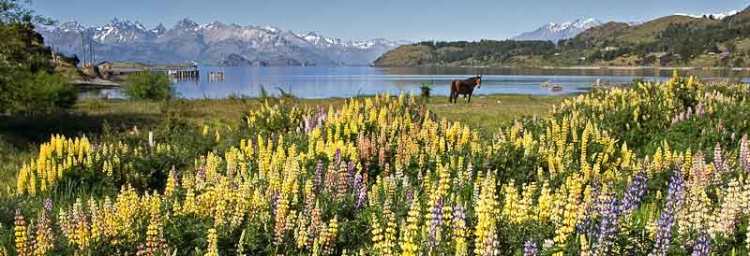
Puerto Guadal, Patagonia, Chile
This story would not be complete without mentioning the conservation efforts of Americans Kristine McDivitt Tompkins and Douglas Tompkins. It’s thanks to their efforts and the hard work of many others that so much of Patagonia in Chile is being protected and can continue to be the home of those who are supporting their community and respecting the earth at the same time. In my 20s I was fortunate enough to travel to Puerto Montt and the island of Chiloé. I only got a brief taste of Patagonia from there, and have wanted to return ever since!
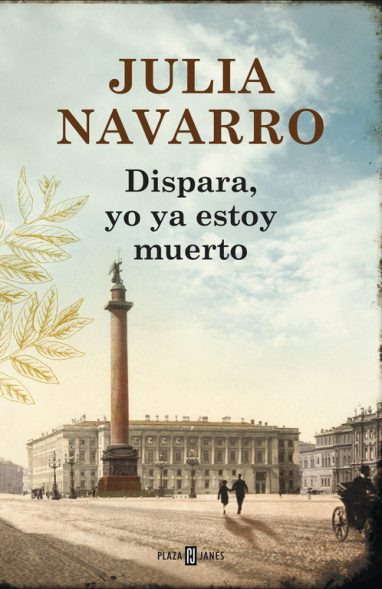
Last week I began a new novel: Dispara, yo ya estoy muerto (Shoot Me, I’m Already Dead) by Spanish author and journalist Julia Navarro. This is an ambitious novel that follows the story of two families – the Zuckers and the Ziads – whose lives become intertwined when Samuel Zucker, fleeing the persecution of Jews in late 19th-century Czarist Russia, arrives in the Promised Land and purchases land from the Ziad family. A strong friendship ensues between the two families that is ultimately tested as the land they live in becomes enveloped in intolerance and violence.
Julia Navarro was a journalist for many years and now has published several books of fiction. You can watch an interview with her on Spanish television here and and read a Q+A in English with her here.