Rosalía

Rosalia

One of the big winners this year at the Latin Grammys was Rosalía Vila Tobella, a 25-year-old Spanish singer-songwriter from Catalonia, Spain. Wait – you ask. A flamenco singer….from Catalonia?? Yes, A flamenco singer from Catalonia who is bringing her own style of “nuevo flamenco” mixed with hip-hop and pop to the forefront. Many say Rosalía is a big reason we’re all talking about flamenco again, and that she’s getting a new generation excited about this tradition by mixing the music up in new ways. I couldn’t agree more.

When I first heard her music and saw her videos, I knew she had captured both traditional Spanish feeling and icons as well as the sound of a new, young generation. This generation has come of age in a Spain that’s very different from that of their parents and grandparents. In some ways it’s a very different Spain from even ten or twenty years ago. Rosalía successfully combines both new and old. One reviewer from Pitchfork describes her work well:

“One approach—a very successful one—lies in El Mal Querer, the relentlessly gorgeous album from Rosalía Vila Tobella, a 25-year-old Spanish singer with one foot steeped in her Catalan history and the other hypebae-sneakered foot sidling into the future. Rooted in flamenco—the Arabic-influenced Andalusian music which she has studied since a young age—El Mal Querer is a dramatic, romantic document that seamlessly links that tradition’s characteristic melodrama to the heart-wrenching storytelling of modern, woman-flexing R&B. Flamenco music carries the sound of Spanish history within it—you can practically hear the migration patterns—and Rosalía uses it to tell the story of a doomed relationship across 11 songs, each one serving as a new chapter. It is one of the most exciting and passionately composed albums to appear not only in the global bass tradition but in the pop and experimental spheres this year.”

I really respect Rosalía’s study of flamenco and what she brings to the genre. Some people say that, being from Northern Spain, she has no business representing the traditionally Southern Spanish sound of flamenco. Whatever!! Here is the popular track from El Mal Querer: “Malamente.”

Happy Holidays – Felices Fiestas.

Images courtesy of El Rescate Musical.

Living on Borrowed Words

If someone told you to no longer use the word “burrito” to describe beans, rice, lettuce and cheese wrapped up in a tortilla, what would you do? It is commonly thought that the word “burrito” comes from the fact that, like a little donkey that can carry many items on its back, a burrito carries lots of different ingredients all together.

burrito
I hereby give you permission to look up more cute donkey pictures online.

This is a simplified example, but as a Spanish to English translator I am faced with these conundrums on a regular basis. We as a global species are exchanging more goods and services across our self-imposed borders than ever before. Language reflects those who speak it, so naturally you’re going to hear someone in Spain use the word “Bluetooth” when setting up a stereo system. You’ll hear someone here in the U.S. say he’s buying a “piñata” for a party. Let’s not even try to come up with another word for “dim sum!”

This is all to say that we as translators walk a fine line between being true to our target language (the language we’re translating into) and retaining the soul of the original text. I enjoy finding out about how other translators navigate this cultural and linguistic space.

Translation.png

A lot of folks have very strong opinions about this topic, especially people in Spanish-speaking countries who see those using Anglicisms as a way to seem “cool”. Being from California where many of our everyday words are from Spanish, I’m all for using borrowed words in my speech. In general I agree with this article from the New York Times opinion columns. That being said, more formal document translation is a different beast: if there is a succinct and obvious word in English that will describe a Spanish word, I will use it.

Here are some examples of Spanish words that I would borrow while speaking, but would change to a specific English word when translating a document:

Bodega: I would say “bodega” to refer to a convenience store on the East Coast, and would translate it as “cellar” for most other purposes.

Embarcadero: I would use this if it was a specific name, and otherwise would translate it as “boat dock.”

Federales: Country music fans will agree that we and Willie Nelson will always use this Spanish word for the most part, but in writing I may translate it as “federal police.”

Incomunicado: I would translate this to “unable to be reached,” “out of touch” or perhaps even “M.I.A.”

Pronto: I would say “pronto” in a conversation, and would translate it as “quickly.”

Reconquista: I would translate this as “reconquest.”

What are some common words you use that come from a different language? If you’re a translator, do you have a hard stance on this topic?

For an fun list of Spanish words borrowed by English speakers, check out this site, and for an infographic of common Anglicisms and their real Spanish equivalents, see this site. The Cervantes Institute recently published this dictionary of Anglicisms among Spanish speakers in the U.S. and the dictionary portion begins on page 37 of the document.

Images courtesy of El Camión Mexicano and Lionbridge.


Dichos

¡Feliz otono! – Happy fall!

What have you been up to so far this season? I’ve been enjoying the changing weather and getting outside as much as possible. I like to take a mid-morning walk to break up my workday, and even here in California there are changes in color and in the air at this time of year. Another highlight for me so far this season was a celebratory dinner at San Francisco restaurant Jeanne d’Arc with fellow members of my local translator’s association: delicious food and lovely company. It’s always fun to walk into a room and hear about ten different languages being spoken all at once!

For today’s post, I’m sharing some “dichos”. “Dichos” are sayings or proverbs of wisdom. There are many dichos in Spanish, some well-known and others that only pop up once in a while. Here are four of my favorites, in no particular order. All translations into English are mine, and hopefully I’ve captured the sentiment of each.

Camarón que se duerme, se lo lleva la corriente. – The shrimp that sleeps gets swept away by the current.

Camarón


No tengas como vano el consejo del anciano.– Do not take in vain the advice of an elderly person.

Anciana


Si quieres el perro, acepta las pulgas.  If you want the dog, accept the fleas.

Pulgas


Poco a poco se anda lejos. – Little by little, one walks far.

Walking

Have a great week!

La Petenera

petenera-sombra
La Petenera

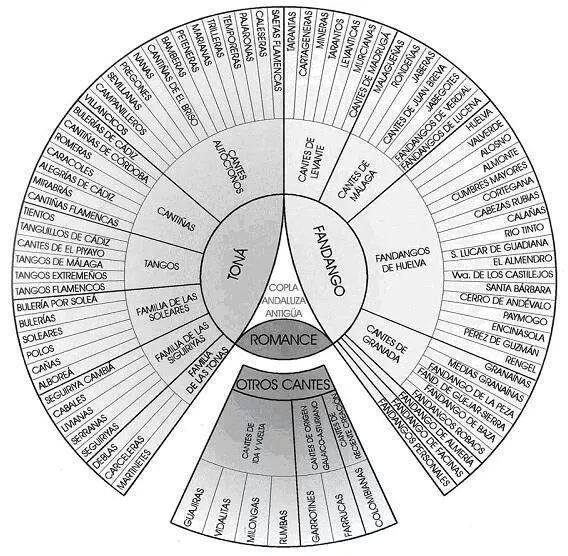
Last year I heard “La Petenera” for the first time. La Petenera is a song with its origins in Spain; it is sung in the flamenco style. There are actually many Peteneras, and they make up a specific category of flamenco song with a “palo” of a strong twelve-beat meter. The ever-popular “Sevillanas” are in the same family as “Peteneras”:

The Palos of Flamenco
The many, many “palos” of flamenco!

But back to “La Petenera”. This is a heavy song. Countless theories, verses, versions and superstitions surround it. I’ll try to keep this description fairly simple, and if you want to really go down the “rabbit hole,” see some of the links I share at the end of this post!

The song’s dark, melancholic lyrics tell the story of a woman who brings heartache and bad luck to the men she seduces. One version tells of her funeral, in which the streets are so crowded with her former lovers that one cannot move. To this day, some performers refuse to play or sing Peteneras because they believe that doing so will bring bad luck – or even death.

There are three theories as to how this song came to be.

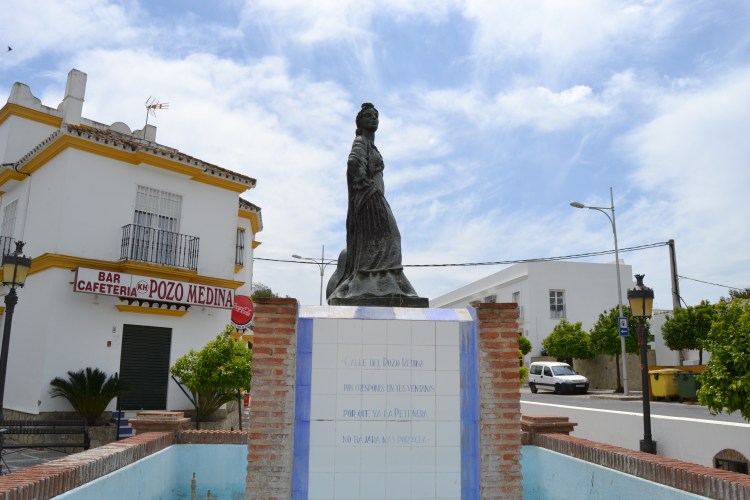
One theory is that the name of the song refers to a “cantadora” (a woman singer) called “La Petenera” who was born in Paterna de Rivera, a town in the province of Cádiz in Andalucía, Southern Spain. She was seductive yet cold-hearted, and known to be the “damnation of men”. The name “Petenera” would have been derived over time from “Paternera”, a woman from the town of Paterna:

Quien te puso Petenera                                  
no supo ponerte nombre                               
que te debían de haber puesto                      
la perdición de los hombres.

Whoever called you Petenera                                  
did not know how to name you                               
and should have called you                      
the damnation of men.

Monumento_a_La_Petenera_(35645663765).jpg
Monument to La Petenera in Paterna de Rivera, Cádiz province

A second theory is that this song was sung by the Sephardic Jews who came to Spain from the Balkans generations ago. It’s said that some Sephardim of the Middle East still sing this song. In one version, the lyrics refer to a beautiful Jewish woman who is going to the synagogue in search of “Rebeco,” assumed to be an antiquated version of the name “Rebecca”:

¿Adónde vas, bella judía                                  
tan compuesta y a deshora?                           
Voy en busca de Rebeco                                   
que está en la sinagoga.                                  

Where are you going, beautiful Jewish woman?
so dressed up and at this late hour?
I’m going in search of Rebeco
who is in the synagogue.

Peteneras (Mariano Tomás)
La Petenera with her men on strings.

The third theory is that the song originated in the Americas and then made its way to the Iberian Peninsula when conquistadors returned to Spain and Portugal. Or, perhaps, conquistadors brought the tradition of this song with them and it changed over the years after being brought to the Americas. Some historians believe that the name of the song is a nod to the region of Petén, Guatemala. In fact, we do find versions of the song in Latin America.

45-la-petenera
An old bingo card (lotería) from La Huatesca, a region along the Gulf of Mexico: “In a traveling boat/crossing the blue sea/she arrived from a strange land/keeping in a trunk/her song La Petenera.”

No matter what theory one stands behind, this is without a doubt an entrancing and soulful song. Here are two Peteneras. One is sung by Ana Mochón and Antonio de la Luz and the other is by Curro Malena and Juan Habichuela.

For further info about La Petenera, visit these sites:

https://iniciacionalflamenco.blogspot.com/2012/02/la-petenera.html

https://www.revolvy.com/page/Peteneras?

http://adarve5.blogspot.com/2013/11/los-inciertos-origenes-de-la-petenera.html

https://www.horizonteflamenco.com/la_petenera

Photo credits: Wikimedia Commons, Almanaque, Iniciación al Flamenco, Cosas de Andalucia


Cool Salsa for a Hot Summer

I like the title of this post because in addition to literally being about salsa it gives a nod to the book “Cool Salsa,” which I recommend to young readers wanting to dive into bilingual reading.

On to my main topic, though – yummy salsa! Here in Northern California, some of our hottest summer days are arriving now. August and September call for refreshing food and drinks. I’ve been on the lookout for easy recipes I can make with the English-language class I’ve been teaching this summer, and a friend recently shared this lovely book of salsa recipes with me. I like the recipes in this book because of the unique ingredients such as mango, jicama, garlic or oranges. Here’s a refreshing recipe in English and en español that would be perfect for a summer snack.

 salsadepinapicante

Ingredientes
  • 4 rebanadas de piña fresca
  • ¼ cebolla (puede ser blanca o morada)
  • ¼ taza de hojas de cilantro
  • 4 chiles serranos
  • Jugo de un limón
  • Sal al gusto

Preparación

1. LIMPIA la piña, elimina el centro y corta en cubos pequeños.

2. PICA la cebolla, el cilantro y los chiles serranos.

3. MEZCLA los ingredientes en una salsera, finalmente sazona con el jugo de limón y sal.

4. REFRIGERA mínimo por 10 minutos.

Ingredients
  • 4 fresh pineapples slices
  • ¼ onion (it can be white or red)
  • ¼ cup cilantro
  • 4 serrano chiles
  • Lemon juice
  • Salt to taste

Preparation

1. CLEAN the pineapple, taking the center out and cutting it into small cubes.

2. CHOP the onion, cilantro and serrano chiles.

3. MIX the ingredients in a small bowl, lastly adding in the lemon juice and salt.

4. REFRIGERATE for at least 10 minutes.

For a slightly different version, you can add fresh mango cubes.

¡Buen provecho! – Enjoy!

Photo thanks to iStock.

A Newsy Post

Here we are with summer well underway! I’ve been enjoying slower days, longer evenings with the sun still out, and a recent full moon accompanied by Mars.

Since starting my Spanish to English translation business, I’ve been pretty good about establishing a daily routine when working from home. However, I’m finding it much more challenging to give myself a break during summertime. With no one to tell me, “Time for vacay!”, I have to create it for myself and decide when and where to take off. Little by little I’m learning to let go, trusting that opportunities won’t pass me by when I step away from a computer, and to just enjoy the moment.

The fact that there’s so…much…going….on in the world around us certainly helps to get me distracted from a to-do list. A huge upset for Spain in the World Cup….AMLO wins Mexico….and, of course, other’s people’s dreamy vacation photos!

In case you also need a little distraction, here are three newsworthy and positive stories that I found today for your reading enjoyment.

1. Spanish scientists spotted the first great white shark to be seen off the coast of Mallorca in decades.

2. Aeroméxico made it’s first trans-Pacific flight, the first of its kind to be operated by an all-female crew.

3. This Venezuelan soccer star is helping to bring FIFA Women’s World Cup to our attention.

reading-at-the-beach

Cheers,

Alison