Literary Translation and Public Domain Books

Today’s post is all about literary translation. Do you remember a book you read in translation? Perhaps it was a classic literary translation like Don Quixote, or maybe it was a more contemporary title. Although many people don’t stop to think about it, literature in translation often forms a significant part of our reading lists while growing up in school and as adults. Literary translation continues to be an integral part of the translation profession, too.

If you speak more than one language, chances are you’ve read a book that is unavailable in other languages. I have to ask myself and other translators: What’s stopping us from translating a book that we’d love to see in our native language? Some translators do just that, often sending excerpts to a publisher to find out if there is any interest in publishing a translation.

Established translator and all-around freelance translation guru Corinne McKay recently tweeted: “As I sit here working on a book translation (very interesting biography of a French resistance fighter), I once again wonder: why don’t frustrated literary translators just translate public domain books and self-publish them? You could start now!”

So true! But what is a public domain book? Stanford University offers a definition on the library’s website: “The term “public domain” refers to creative materials that are not protected by intellectual property laws such as copyright, trademark, or patent laws. The public owns these works, not an individual author or artist. Anyone can use a public domain work without obtaining permission, but no one can ever own it.”

Several websites feature public domain books. Corinne mentions Project Gutenberg in one of her recent podcasts; Project Gutenberg has titles in English, German, French, and Portuguese. Feedbooks has titles in English, French, German, Italian, and Spanish. The Internet Archive has thousands of books in many languages.

If you are a translator who knows of a good resource like the one listed above, please leave a comment below!

Photo by Leandro DeCarvalho.

Film: Todos lo saben

“Todos lo saben” (English title: “Everybody Knows”) is a Spanish-language psychological thriller from Iranian director Asghar Farhadi. I was completely riveted during the whole film! “Todos lo saben” stars Penelope Cruz, Javier Bardem, Bárbara Lennie and Argentinean actor Ricardo Darín—as well as a pretty exceptional supporting cast.

I had a feeling this movie would have an intriguing storyline and many layers; it did not disappoint. I highly recommend seeing this film (it’s currently streaming on Netflix.) Don’t worry, no spoilers in this post! However, pass up the trailer below if you feel, like me, that many trailers give away too much.

Penelope Cruz plays Laura, a woman who returns for a visit to her small Spanish town for her sister’s wedding. She brings her two children with her. We immediately become swept up in her homecoming and the various people she gets to catch up and celebrate with. However, we know that, because this is a thriller, something else will be lurking beneath the happy surface. Ultimately, a series of events draw out old secrets and small-town history that must be reckoned with.

See this movie for it’s beautiful depictions of small-town Spanish life, as well as for the twisting and turning story line. I hope you enjoy it as much as I did.

Here’s the trailer:

Springtime Rituals

spring-season-flowers-os-2048x1152.jpg

Our part of Northern California received heavy rain this winter. While lots of rain is a blessing to this often-parched part of the country, it resulted in quite a few gloomy days after the initial, exuberant rain celebrations had worn off. Now it’s officially spring here in the Northern Hemisphere – we made it! Apart from common religious holidays, typical springtime rituals where I live usually center around nature: everyone seems busy in their garden, tender and fresh produce begins to show up at the farmer’s markets, and folks talk about the various cute baby animals they’ve spotted: Fledglings in a bird nest! A fox kit!

kit-fox-LEAD.jpg.653x0_q80_crop-smart

When I lived in Spain, this was the time leading up to Semana Santa and all it’s gilded glory:

Semana-Santa-Sevilla-Raúl-Caro

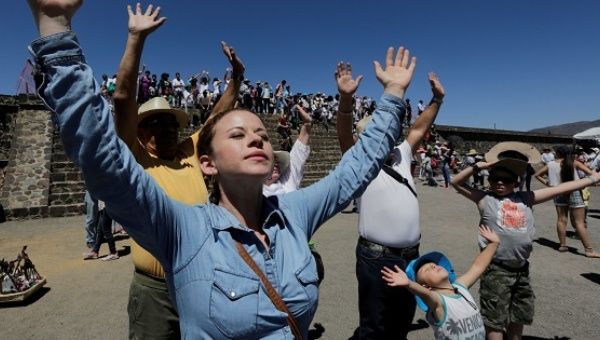
In Mexico, thousands of people dress in white and gather at the enormous Teotihuacán Pyramid, located 30 miles northeast of Mexico City. They raise their arms towards the sky to soak up energy for the year:

2017-03-20t205751z_968013626_rc1f654f2900_rtrmadp_3_spring-equinox-mexico-teotihuacan.jpg_1718483346

Costa Rica celebrates El Día del Boyero (Oxcart Driver’s Day) in early March. The colorful oxcarts seem to welcome spring:

549901_425225867563947_409620814_n

Happy spring to you,

A.

Images courtesy of mnn.com, funeu.es, telesueenglish.net, hdqwalls.com, escazunews.com

Translating Poetry

Translating poetry is a special job: the poet, if alive, entrusts the translator to capture the soul of a poem so that speakers of a completely different language might fully understand the poet’s message; the translator is responsible for making the right decisions along the way, ensuring that this transfer of ideas happens smoothly.

Whether the author of the original poem is still alive or has passed away, it’s an honor to translate a poem! I am by no means an expert, but here are some steps that have helped me so far in this work. Here are some key decisions a translator must make during the process of translating a poem, as well as some additional inspiration:

1. What to do about structure?  A translator must decide how important rhyme or rhythm needs to be. Is rhyme the most important aspect of the work? Is it non-negotiable to keep the same number of syllables in each line, or would being that strict result in forcing poor word choice? If so, perhaps it’s best to focus on best word choice and overall feel of the poem instead of being restricted and risking a loss of meaning or soul.

2. Do your research. When translating a poem, I sometimes come across a culturally specific phrase or reference that I’m not familiar with. A translator will probably need to do some deeper research in a case like this. I often turn to terminology help on ProZ.com (not an affiliate link) because fellow translators from all around the world can provide answers to the question posed. So, if you’re translating a poem from a Costa Rican poet and there is a specific word that you suspect may be very particular to that country or culture, chances are that someone from that part of the world will help you.

3. Read it over and over…and over….Print out both poems, read them over and make corrections and changes. Put the work aside for a day or two, then come back to it. You’ll find more details that you’ll want to change. Read the poem aloud as well: that helps to clarify if you’ve captured the rhythm and feel of the overall work.

Those are my top three tips for now. If you are a translator who works with poetry, take a look at the resources from Oxford Handbooks Online. If you have a resource to share, please add it in the comments!

In closing, here’s inspiration for translating poetry from writer Jennifer Liddy:

“Translating a poem is a lot like writing a poem yourself. You have to know what you want to say. You have to feel what you want to say. You have to be focused. There are a thousand other jobs that are easier, better paid, and eyesight-saving, but translating has its own glories. Putting poems into another language is one of the best ways to share culture, honor poets, and remind us that we can transcend geography. Do your best.”

– Jennifer Liddy, 2002

Image courtesy of sherbino.org.

What Books I’m Reading in 2019

What books to read in 2019?? I just finished Michelle Obama’s new memoir in Spanish. The Spanish translation was carried out by three translators, and I was impressed with their ability to capture her voice and style. I’m now re-reading Lucia Berlin’s short stories in A Manual for Cleaning Women.

A few more books I hope to read this year are…

  1. Margaret Atwood’s new novel, The Testament, which is arriving in September.
  2. Such Small Hands by Andrés Barba was released by a new-to-me publisher called Transit Books in Oakland, California. It was voted one of the best books of 2017 by The Guardian.
  3. Birthday Girl by Haruki Murakami begins on a rainy night in Tokyo. I’m already hooked because the setting sounds like classic Murakami.
  4. Cristina Rivera Garza’s The Taiga Syndrome is bringing this author into the spotlight.
  5. Nordic noir also makes my list, especially during the chilly winter months.

What are you reading right now?

books-background-images-12

Image courtesy of backgroundcheckall.com.

Gender Neutrality in Translation

Gender is a big topic these days and the use of gender-neutral language is a much-debated subject right now in the translation industry.

heshe

Translators and the people who work with them have long been debating how and when to use gender-neutral language. If conference topics and online articles are any indication, the overall global conversation about gender is bringing the topic of gender neutrality to the forefront again within the translation profession.  As a Spanish to English translator, I work with two fairly “patriarchal” languages: the default pronoun still tends to be “he” in English and “‘él” in Spanish. However, this is changing as people question the default use of the masculine and come up with new ways to write and speak. Thinking about gender neutrality in translation presents the opportunity to re-think my own approach to language as I work.

Depending on the type of document I’m translating, I may choose to state “he or she” instead of just “he.” Take for example a statement by a student who writes, “Siempre me presento a un profesor nuevo para que pueda saber mi nombre de inmediato.” I could translate this to, “I always introduce myself to a new teacher so that he or she may know my name right away.” Notice that, even though the Spanish sentence uses the default masculine indefinite article “un,” I chose to use the pronouns “he” and “she” in the English sentence to open it up to both genders. It’s important to point out that this still leaves out the option of completely gender-neutral pronouns such as the use of “they” as a singular pronoun, which some folks are doing. More on all that here.

Translation companies Transpanish and Ulatus have thoughtful articles on this topic:

Translating with gender-inclusive language: https://transpanish.biz/translation_blog/guide-to-translating-with-inclusive-gender-neutral-language-in-english/

Gender issues in translation: https://www.ulatus.com/translation-blog/gender-issues-in-translation/

What is your stance? Do you have a definite preference? Does it depend on the context and purpose? What do you think of  the new use of the “@” symbol for Spanish words like “tod@s” or Latin@s,” or the English use of neutral pronouns like “Ey/em/eir/eirs?”

Image thanks to The New Republic.