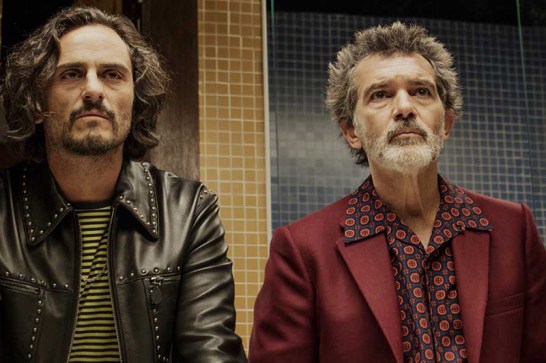
In the spirit of my previous blog post, today I’m sharing my thoughts on Pedro Almodóvar’s new film, “Dolor y Gloria” (“Pain and Glory”). Antonio Banderas is nominated for an Oscar for his role as Salvador Mallo, an aging director in the process of reflecting back upon his life. Asier Etxeandia plays an actor with whom Banderas’ character worked with in the past, and they’re reconnecting over a new project; Penélope Cruz plays the main character’s mother in flashbacks of his youth.
What I most enjoyed about this movie was the classic Almodóvar imagery: bright, intense colors…a sense of place in scenes of a Madrid apartment and a small town in southern Spain. I also loved the moment, about halfway through the movie, when little snippets of this man’s life story begin to come together—and you understand why some seemingly everyday occurrences launch this man into vivid memories.
I hope you enjoy the movie if you see it, and we’ll see what happens on Oscars night!
“Estrenar” is one of my favorite Spanish words. This verb is often used to mean “to wear something for the first time.” It also means “to premiere” or “to debut.” When wearing something new for the first time, I often imagine that I am “premiering” the new shoes, or earrings, etc.
Here’s an example of how it might be used:
“Anoche estrené mi nueva chaqueta de cuero.” – “Last night I wore my new leather jacket for the first time.”
Fun, right? This word has a flashiness to it that, to me, brings to mind glittering lights and the excitement of something new.
“Estrenar” is fitting right now, as we’re in the beginning of a new year and entering into Oscars season, both of which bring new celebrity debuts, sparkling visuals of hopes and dreams, and fancy outfits—glittering and enticing for the first time.
For a few more examples of “estrenar,” click here.
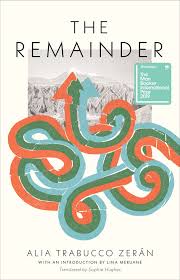
The Remainder by Alia Trabucco Zerán and translated by Sophie Hughes
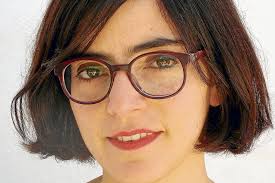
Earlier this fall, I read Chilean author Alia Trabucco Zerán‘s new book, The Remainder. The original Spanish title is La Resta, and I read the translation by British translator Sophie Hughes. This novel is at once familiar and distinct. While the focus is on post-Pinochet Chile, the story is told through the eyes of present-day young adults who grew up in the shadows of their parent’s rebellious, militant past. These characters are close to history, yet removed just enough to still be grappling with what history means to them. Alia Trabucco Zerán captures this new generation and the uneasy questions about Chile’s history that still linger in the air.
Chilean author Alia Trabucco Zerán
The protagonists of The Remainder are Felipe, Iquela and Paloma. Although living in modern-day Chile (and, for one of them, modern-day Germany), all three are still haunted by childhood memories surrounding their parent’s secretive, anti-dictatorship activities. Each of the three, in their own way, cannot escape an era in which they were only very young children.
Together they go on a hero’s/heroine’s journey to solve a mystery (I won’t give any spoilers here!). During this journey, they encounter painful reminders of the past and questions about the present, as well as what is to become of their future. The author captures a beautifully stark, dry, unforgiving landscape, both in urban Santiago and in the vast desert and mountains beyond. This landscape seems to mirror the unforgiving thoughts and actions that the main characters have and act out in their own lives.
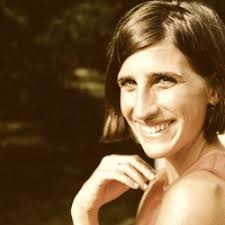
For me, the most captivating parts of the book were those told in Felipe’s voice. I’ve never read anything like these passages, and kudos to Sophie Hughes for translating and capturing such a unique protagonist. You have to read this book to fully understand Felipe’s character—what a creation.
British translator Sophie Hughes
This book is mysterious, captivating, beautiful…highly recommended!
You may be wondering what the title of this blog post could possibly mean, but hang in there and let me explain! I recently returned from the 60th annual conference of the American Translators Association. This was my first time at the conference, and the week was filled with connections with translator and interpreter colleagues. The American Translators Association represents linguists here in the U.S. that speak and work with countless languages – what fun to walk through the halls and hear Spanish, French, Japanese, Italian, German, Portuguese and so much more.
After a week of inspiring workshops and timely conversations about our field—and relaxing, sunny weather in Palm Springs—I got a voicemail from my local fire department about an evacuation warning. My husband and I drove back up north to a world of wildfires, smoke, evacuations and power shutoffs. We live in a rural area here in Northern California, so we have a generator and other emergency supplies; however, we decided to stay in the Bay Area with family for the week to wait it out. Luckily, the fire was pretty far from where we live. Nonetheless, these events are getting more frequent and more intense with each passing year.
So, that’s my explanation of the conference and the fire – now, the community. So many folks reached out to ask if we needed anything, and fellow translator and interpreter colleagues checked in. I felt really lucky to have all the support.
Now we’re back home and will hopefully have a few days of “normal.” Wishing you a bit of “normal” as well, whatever that may mean to you!
Happy International Translation Day! On September 30th and throughout this week, translators and interpreters celebrated International Translation Day 2019. The American Translators Association created an informative video that explains what a typical day might look like for a translator or an interpreter. The video also explains the difference between a translator and an interpreter.
Here’s the video:
While many of us in this field find ourselves doing a bit of both jobs, we usually specialize in either translation or interpretation. Both are rewarding, and translation continues to connect me with a diverse array of people and companies around the world.
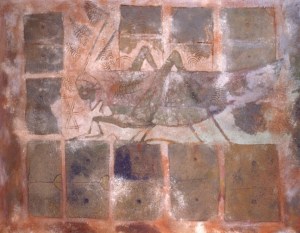
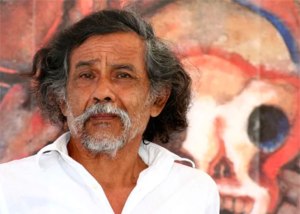
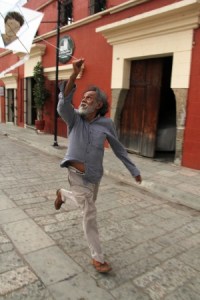
Today’s post is an homage to Francisco Toledo, in my opinion one of the greatest Mexican artists of all time. He passed on September 5th at the age of 79, and the art world has been remembering and celebrating all he did and was.
Francisco Toledo was born in Juchitán, Oaxaca in 1940. He attended art school in Oaxaca City as a young man. He later studied in Paris and other cities, yet always drew his primary inspiration from the energy of his native Oaxaca.
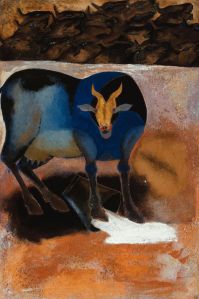
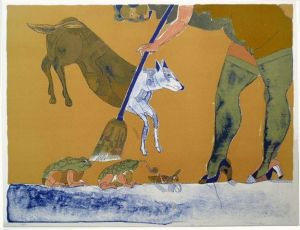
“Vaca mala (Bad Cow),” no date“Lagartijillas (Little Lizards),” 1985
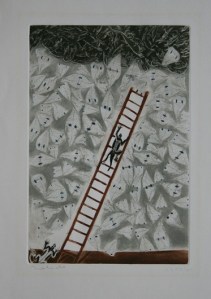
Over the years his art and activism gained him much recognition in Mexico and abroad. He recently made cometas (kites) emblazoned with images of the disappeared. He flew these kites in the streets of Oaxaca.
As one news article put it, Francisco Toledo’s spirit continues to fly kites up in the sky. We thank him for the inspiration and activism; he will be sorely missed. For a recent profile of the artist, read this Smithsonian article.




 Alison Trujillo Translations