Both Spanish and English have beautiful words to describe winter! These unique words go beyond some of the more commonly known terms to conjure up the feeling of the season.
Spanish winter words:
carámbano – icicle
rompope – eggnog
duende – elf, fairy, goblin
copo de nieve – snowflake
hoguera – bonfire
granizo – hail
muñeco/a de nieve – snowman/woman
cascabeles – bells
English winter words:
névé – nevero
blizzard – ventisca
slush – aguanieve
whiteout – tormenta de nieve, condición de visibilidad limitada por nieve
When Arabic-speaking Muslims from North Africa invaded the Iberian Peninsula in 711, they introduced unique architecture, philosophy, and social norms to the territory. The Arabic language deeply influenced the local vernacular Latin dialect, which eventually became Spanish.
In the 15th century, this territory was now the Spanish kingdom and was presided over by King Ferdinand and Queen Isabella. Despite the Inquisition, the Spanish language already deeply reflected Arabic influences. Some Arabic words also shaped the English language, as you can see by a few nouns in this list.
Arabic (spoken)
Spanish
English
zaytun
aceituna
olive
shatranj
ajedrez
chess
habaqah
albahaca
basil
alhafa
alféizar
windowsill
aljabr
álgebra
algebra
ghitar
guitarra
guitar
zurafah
jirafa
giraffe
laymun
limón
lemon
sindiyyah
sandía
watermelon
Historians traditionally viewed this period of Islamic rule as a time of “convivencia,” or living together, because it’s been widely accepted that Muslims, Christians and Jews co-existed in relative harmony and abundance. In modern times, however, historians question this seemingly idyllic picture. You can read more about the Muslim and Arabic influences in Southern Spain and the diverse views of life during this period in this “Beardy History” article.
Finally, with all the sweet holiday treats not so far behind us, I leave you with one more Arabic word: “as-sukkar,” meaning “azúcar,” or sugar!
The 2022 holiday season has arrived! At first, it seemed to come “on little cat feet” like in Carl Sandburg’s poem “Fog.” Now it’s in full swing: carols playing in every shop and winter-themed coffees, sweet treats, and cocktails. Here’s a cheery scene from the café table I’m writing at this morning:
Client projects are especially inspiring to me at this time of year, and 2022 seems even more robust because events and offerings are in person again. Some of my translation and editing projects this season range from descriptions of health and wellness fairs and services here in California to annual reports that describe leaps and bounds made over the year; holiday recipes from Mexico to a collection of essays from writers and artists living in Alaska.
I wish you a happy and healthy holiday season and look forward to connecting in 2023!
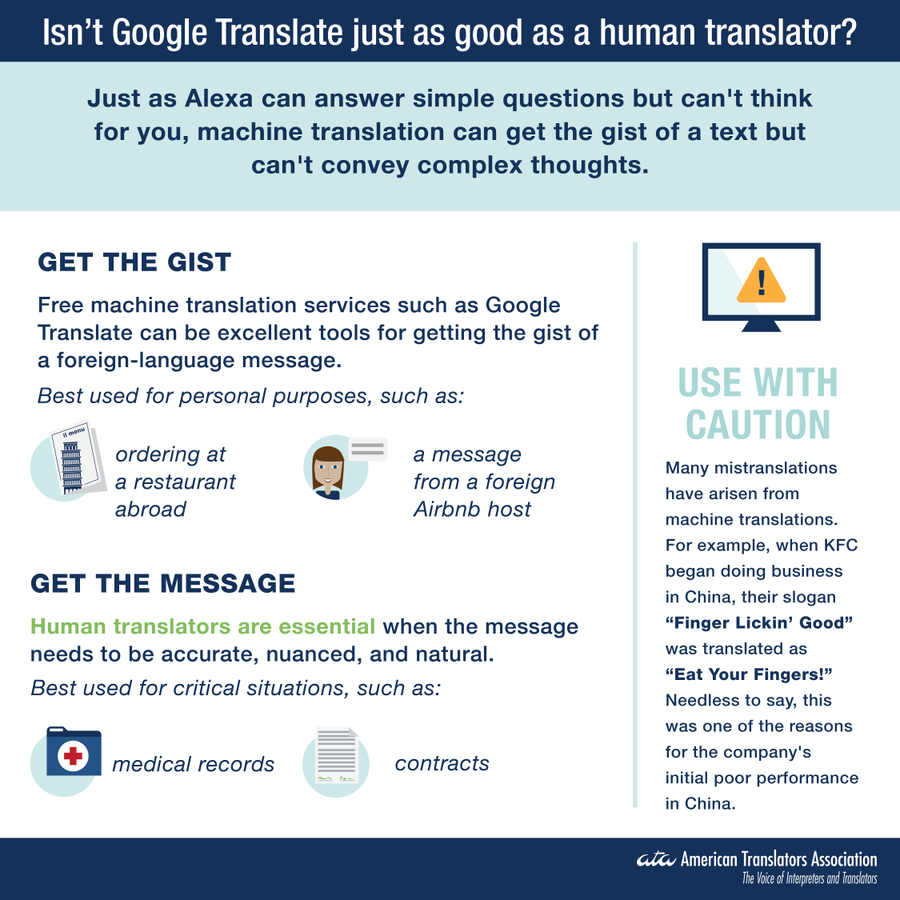
A question: “Finger Lickin’ Good” or “Eat Your Fingers?” Read on…
September 30th was International Translation Day. It’s an opportunity for us linguists to celebrate our work and to spread awareness about the importance of language access and the translation and interpretation professions.
If you receive my newsletters or read this blog, chances are you know how important human translators are. But what about AI and machine translation, like Google Translate? Well, machine translation is quite helpful at times! There are other times when a human translator is necessary.
Here is a simple way to tell if machine translation or human translation is best for the task at hand:
So, there you have it. Don’t be like KFC. Make sure to use the right tool for the task!
Here in the Western United States, this time of year brings a flurry of communications about wildfire prevention and safety. Organizations are preparing resource lists and social media posts in advance of any wildfire event, and of course it’s important to get these written communications out in different languages.
In case you or your organization needs a jump start on some frequently-used terms in English and Spanish, here is a list of Spanish/English Fire Safety Vocabulary that may prove useful. These are some of the most frequently-used terms I translate when it comes to wildfire safety and preparedness.
Bilingual communications are found everywhere! Here is a Spanish/English forest fire danger index sign in Mendoza, Argentina, courtesy of Los Andes.
August is Women in Translation Month. Started by Meytal Radzinski in 2014, it honors women writers and translators from around the world. To celebrate, I’m highlighting 2 women who have significantly contributed to Spanish/English literary translation.
I was about 13 when I first began reading books by Latin American and Spanish authors. The English versions of these novels were frequently the work of esteemed translator Edith Grossman. Not only did her translations feed my hunger for language learning and traveling to faraway lands, she showed me that one can build a successful career by using language skills. You can read more about Edith Grossman here: “A Tribute to Edith Grossman” by The Center for Fiction
Another contemporary Spanish-to-English translator is Christina MacSweeney, who specializes in Latin American literature. I enjoyed her translation of On Lighthouses by Mexican author Jazmina Barrera. You can read an interview with Christina MacSweeney here: “Cover Versions: Talking Translation with Christina MacSweeney”
If you’re looking for your next good read, check out the books in translation from Two Lines Press and Transit Books. You won’t be disappointed!