What’s in a word?

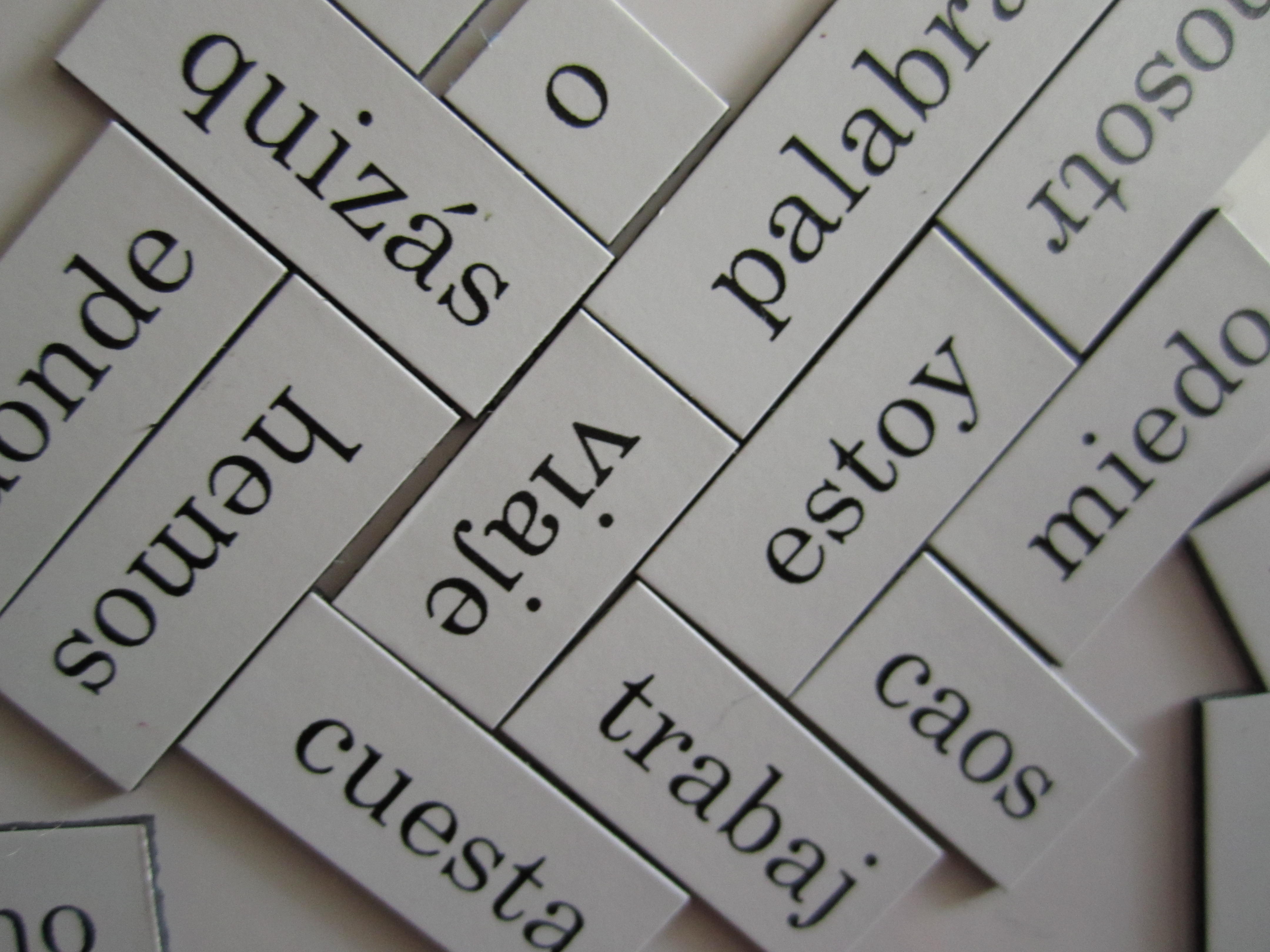
palabras
Image thanks to rqbg.wordpress.com.

What’s in a word? Well, everything. As anyone who has learned a new language will tell you, words have weight.  A perfectly placed word can make or break a joke. A thoughtful word can “hit the nail on the head” and express exactly what someone is feeling. There are the funny horror stories of confidently expressing a word or phrase that means quite the opposite of what one intended, causing all chatter to stop. Some words have double meanings. Still others are used in language textbooks yet practically never spoken in real life.

My work as a Spanish teacher and trip leader for students abroad has been full of  hilarious recountings: “And then I said I was embarazada and the conversation came to a halt!” I’ve laughed along with my students about conversations gone awry, and have sighed with relief when learning that one new word that you wish you’d known five years ago. We all want to express our true selves, no matter what language we are speaking.

Word choice is always present in language learning, and I re-discovered a book this week called Hablando bien se entiende la gente. Published by members of the Academia Norteamericana de la Lengua Española (English: North American Academy of the Spanish Language), it includes common errors made by Spanish speakers in the United States. A major goal of this work is to keep Spanglish at bay. Of course, the bien piece is key here. Obviously the authors want the Spanish language to remain true to its origins, and therefore think that speaking Spanish well means keeping anglicisms out. An example of this is warning readers of falsos amigos, (English: false friends) that do not exactly work as cognates and instead are often misused (e.g. salvar instead of guardar).

To be honest, I continue to be torn when it comes to this topic of “language purity.” Yes, I respect the value of correctly pronounced words and proper syntax. I’m a language teacher, after all. Yet language is fluid, language is rich, and language is a reflection of those who use it. There are certain words I love to use that obviously come from English: carro, surfear, oficina. Would I employ them in a job interview? Probably not, and perhaps that is the author’s point.

And so, Hablando bien se entiende la gente is interesting and funny to me. It does give us good reminders of the proper use of so many vocabulary words. Still, when on a day trip outside the city and passing all those ghastly trailers that Americans seem to love, I will not use the dull word remolque. – I think I’ll stick with trailito instead.

Dulces Navideños

There are so many traditional foods enjoyed at this time of the year. I’m highlighting two of my favorite holiday sweets here, along with resources on how to make or purchase them.

Mexican Wedding Cookies

Mexican Wedding Cookies: These are sometimes known as Russian tea cookies. Their powdery covering is perfect for the holidays. I found a nice recipe for these from Full Belly Blog.

Turrón: El Almendro turrón will always mean Christmas in Spain to me. To purchase, visit The Spanish Table.

Turrón
Turrón


photo credits: Back to the Cutting Board via photopin cc and formalfallacy @ Dublin (Victor) via photopin cc

Thoughtful Gifts

December‘Tis the season for gift-giving, and with the plethora of shopping options available it is easy to become overwhelmed. How to buy thoughtful gifts? And thoughtful to whom? Being an artist, I personally make the effort to support artisans from around the world when I have the chance and want to buy something special for a friend or family member. Here are some resources with items from Latin America I’ve become aware of recently.  They are all driven by a desire to uphold fair trade practices and to properly support the artisans they work with. 

  • Indigenous sells organic and fair trade clothing, jewelry, and accessories. Be sure to watch the video about Jessica Rodriguez, from Peru, who has partnered with Indigenous on her quest to provide artists and craftspeople a living wage for their work. I’ve seen Indigenous items in a few shops around San Francisco and it seems that the website prices are more reasonable.
  • Abrazo Style  has really fun bags made in Oaxaca. They are appropriately named the Etla tote. Want to know where Etla is? Click here. Then go visit!
  • Colores del Pueblo has a most excellent tagline: “Promoting Social Justice and Cultural Preservation Through Economic Fair Trade.” Enough said!
  • Global Exchange is a local favorite where I’m from. Their online store is under construction, so if you live in California, DC, or Virginia you can check out their brick and mortar stores.

Happy shopping. 🙂
photo credit: kevin dooley via photopin cc

Inspired by “Half the Sky”

This weekend I watched “Half the Sky.” This is a documentary that grew from the book of the same name, written by Pulitzer Prize-winning journalists Nicholas Kristof and Sheryl WuDunn. It aired on PBS in October of this year. We travel with Nicholas and Sheryl to meet strong women leaders who are working to eradicate the systematic oppression of women. We visit a number of countries: Cambodia, Kenya, Vietnam, and India are some….and we bear witness to the challenges young girls and women are facing: prostitution, barriers to education, genital mutilation, economic inequality. This is an eye-opening film; I am incredibly inspired by the women leaders who are profiled here, and amazed at the strength of the women they are working with.

Most of “Half the Sky” takes place in Africa and Asia. Seeing the film got me wondering what the main issues would be if this were to cover Latin America, Spain, and the U.S. – countries in the Spanish-speaking world. What would the world need to hear about? Have the things I’ve seen in my travels given me a glimpse into the harsh reality that many women face daily? (A beauty pageant for young women I witnessed in Ecuador comes to mind. It was both a celebratory and an extremely sad occasion for me.)

I’m sharing three resources about topics which I find interesting and would like to learn more about. These are in no way the only issues, or course….and are simply the struggles that came to mind based on my travel and living experiences abroad:

This is only scratching the surface, but I wanted to start somewhere. What pertinent issues in Latin America do you feel need the limelight?

A Walk Through Día de los Muertos

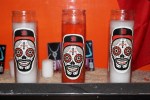
Welcome to my Día de los Muertos gallery! Día de los Muertos is one of my favorite celebrations. We celebrate and embrace death, welcoming back the people who touched our lives and who are now in the spirit realm. Here in San Francisco we’ve had a Day of the Dead parade and celebration for many years now, and it grows bigger every year.

The night began with delicious Salvadorean and Colombian food at El Majahual. After that we wandered the streets, following drum beats and the aroma of burning sage. The festivities then lead to Garfield Park, where altars were displayed. Enjoy the pics!

Atención: riesgo de amnesia

Who should art belong to in times of economic crisis?

This weekend El País has published a series of articles about the challenges to the Spanish art world in this time of economic crisis. How do public institutions continue to acquire relevant and important works when their budgets are being scaled back? How do museums prevent a gaping hole – to paraphrase one of the authors  – in their collections when wealthy inventors can easily speed away with a choice painting or sculpture? These questions and more are addressed.

In his article entitled “Atención: riesgo de amnesia” (Attention: Risk of Amnesia), Manuel Borja-Villel, Director of the Reina Sofía, states that the crisis will have irreversible consequences in the Spanish art world. He states, “To understand that culture is a right is essential;  therefore it is necessary to set forth the opportunity for new management models” so that public art spaces gain just as much support as the private arena. He goes on to say that “if museums are repositories of memory, (Spain) runs the risk of amnesia.” (Translations  are mine.)

Miguel Zaragoza, Director of the Prado, discusses the culture of art going to the highest bidder. In “Al mejor postor” (To the Highest Bidder), he points out that he wants Spain to hold on to what it has; now other emerging countries perhaps have the resources to acquire works that he feels “belong” to the Spanish people and culture, thus leaving a gaping hole in collections.

Is there a moral imperative to ensure that a Picasso, say, stays in Spain – rather than being swept up by the highest bidder and hung in a private home in Russia? How do museums and other public institutions ensure stability and a ripe future in a time when there is a huge potential for private acquisition? These questions are not solely Spain’s but are being asked throughout the world’s art institutions, both large and small.

To read more about this issue, visit the series of articles from El País.

photo credit: an untrained eye via photopin cc